Monday, August 28, 2017
Thursday, August 24, 2017
The Legend
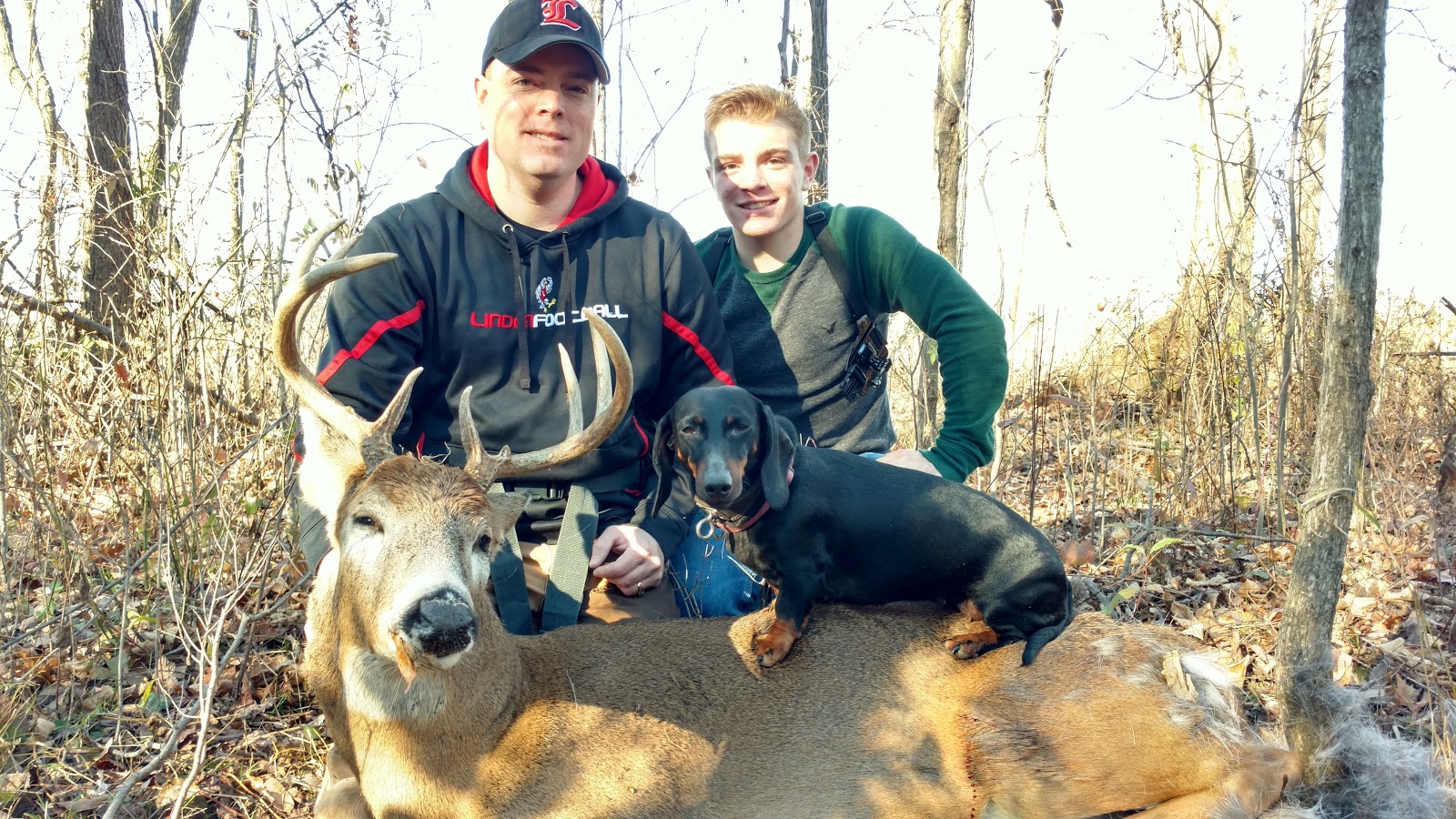
It all started with this minature dachshund named Scout. I bought him from Detroit Mi and he doesn't come from hunting bloodlines. However he was born to track and he quickly made a name for himself. I was training my second dog at the time of scout 3rd season when a I asked a hunter if I could run Sypris first and he said no!! I was taken back by his blunt response! He said it's my son's buck and it's a dandy so I want you to use the legend. Scout made the recovery and everyone was happy.
Today the legend turns 11.
He has been retired for several years.
Happy birthday Scout.
Today the legend turns 11.
He has been retired for several years.
Happy birthday Scout.
Tuesday, August 22, 2017
Saturday, August 19, 2017
Knowing when to start tracking
After a marginal shot you have been told to give the deer some time to stiffen up!! It's going to be really cold so the deer will stiffen up and be dead in it's bed!!
Have you ever been told this or do you believe this to be true?
Picture below is owned by Peterson Bow hunting magizine of a bedded stomach shot buck.
I've seen these eyes plenty of times and it's important to know how to handle these situations!
What you do next will be an important part of recovering your deer.
Deer only stiffen up after they die!!! “stiffen up” theory is faulse. They lie down because they are very sick or dizzy from sudden decrease in blood pressure and they have reached an area that they feel safe lay down. In most cases you don't want to bump a wounded deer out of its bed but there are times when it’s your only option to end suffering. Large muscle and broken bone hits produce bleeding which will lead to death if enough blood is lost. Pushing the deer can keep the heart pumping at an elevated level which can stimulate blood loss and work against blood coagulation and healing. A single lung shot is another time that requires you to immediately start tracking and be ready to make a follow up shot. By keeping the deer moving you increase the blood flow and exhausting the deer to the point you can get a second opportunity. If you can push the deer hard enough and get the diaphragm to collapse this will suffocate the deer and killing him.
The trick is understanding the type of wound you're dealing with. Keep the deer bleeding if the hit is not inherently fatal — this won’t happen if the deer beds, quiets down, and the blood coagulates. On occasion, pushing a wounded deer is your best option.
Getting on him right away can sometimes allow you to get another shot into him, the rapid blood loss with cause dizziness or be disoriented and will allow you to quietly approach for a follow-up shot. You typically have a small window of 15-45 minutes to make this follow up shot. A none lethal wound will start to coagulate in a matter of minutes and the spleen stores blood cells so it realeases white blood cells to prevent infection and platlets start to coagulate the blood. Bone marrow starts making new blood.
A deer with a broken leg is easily tracked by a dog because of the bone marrow that's expelling from the broken bone along with all the scents the dog has been trained to follow.
This is why it's important to understand your shot placement and understand when it's best to track immediately or know how long to wait.
This is another reason I've always said it's best to know someone with a deer tracking dog before you ever need the assistance of dog.
Find a tracker in your area and save their number because if you hunt long enough you will find yourself in the need of the hunters best friend a deer tracking dog.
Call me ASAP for any questions or concerns
810-240-4891
Have you ever been told this or do you believe this to be true?
Picture below is owned by Peterson Bow hunting magizine of a bedded stomach shot buck.
I've seen these eyes plenty of times and it's important to know how to handle these situations!
What you do next will be an important part of recovering your deer.
Deer only stiffen up after they die!!! “stiffen up” theory is faulse. They lie down because they are very sick or dizzy from sudden decrease in blood pressure and they have reached an area that they feel safe lay down. In most cases you don't want to bump a wounded deer out of its bed but there are times when it’s your only option to end suffering. Large muscle and broken bone hits produce bleeding which will lead to death if enough blood is lost. Pushing the deer can keep the heart pumping at an elevated level which can stimulate blood loss and work against blood coagulation and healing. A single lung shot is another time that requires you to immediately start tracking and be ready to make a follow up shot. By keeping the deer moving you increase the blood flow and exhausting the deer to the point you can get a second opportunity. If you can push the deer hard enough and get the diaphragm to collapse this will suffocate the deer and killing him.
The trick is understanding the type of wound you're dealing with. Keep the deer bleeding if the hit is not inherently fatal — this won’t happen if the deer beds, quiets down, and the blood coagulates. On occasion, pushing a wounded deer is your best option.
Getting on him right away can sometimes allow you to get another shot into him, the rapid blood loss with cause dizziness or be disoriented and will allow you to quietly approach for a follow-up shot. You typically have a small window of 15-45 minutes to make this follow up shot. A none lethal wound will start to coagulate in a matter of minutes and the spleen stores blood cells so it realeases white blood cells to prevent infection and platlets start to coagulate the blood. Bone marrow starts making new blood.
A deer with a broken leg is easily tracked by a dog because of the bone marrow that's expelling from the broken bone along with all the scents the dog has been trained to follow.
This is why it's important to understand your shot placement and understand when it's best to track immediately or know how long to wait.
This is another reason I've always said it's best to know someone with a deer tracking dog before you ever need the assistance of dog.
Find a tracker in your area and save their number because if you hunt long enough you will find yourself in the need of the hunters best friend a deer tracking dog.
Call me ASAP for any questions or concerns
810-240-4891
Monday, September 9, 2013
Professional deer trackers of Michigan
State Certified Tracker Rob Miller & Sypris
(810) 240-4891 I live in Genesee Co. Counties I will track in: Lapeer,Oakland,Livingston,Ingham,Shiawassee,Saganiaw,Tuscola,Jackson,,Calhoun,Eaton,Clinton,Gratiot,Sanilac,St. Clair,Macomb,Washtenaw,Lenawee,Hillsdale,Branch
State Certified Tracker Rob Miller & Sypris
(810) 240-4891 I live in Genesee Co. Counties I will track in: Lapeer,Oakland,Livingston,Ingham,Shiawassee,Saganiaw,Tuscola,Jackson,,Calhoun,Eaton,Clinton,Gratiot,Sanilac,St. Clair,Macomb,Washtenaw,Lenawee,Hillsdale,Branch
Friday, August 30, 2013
Peterson Bow Hunting Magazine
Michigan Deer track'n hounds is Featured in the October issue of Peterson Bow Hunting magazine. The story is called Gone to the dogs. When the blood trail stops what do you do next can be the deciding factor in recovering your wounded deer. Tracking dogs in the United States are being utilized more and more every year. Hunters are realizing that cold nose tracking dogs are the real deal. Dogs can successfully track a deer after it has rained and up to 40 hours after the deer has been wounded. Michigan deer tracking dogs recommends that every hunter should find a tracking dog near them and store the handlers phone number just in case there is no blood to follow.
Thursday, October 4, 2012
Michigan blood tracking dogs
Madison shot this beautiful 8 point with a crossbow and the bolt was tipped with a 3 blade "Rage". She made an amazing 40 yard shot. The bolt hit exactly where she was aiming. She ended up hitting 1 lung and sliced the very bottom of the Liver. Bill and his good friend blood trailed the buck until 11pm that night. At times the blood trail looked very promising. They eventually hit a void in the blood trail and soon realized they need some help. I tracked for Bill last year so he already new how the whole tracking dog operation works. He decided not grid search and call in the hounds. I showed up 16 hours after the shot. We started at the shot site and off we went following Sypris. Sypris followed the blood trail with ease. We covered the distance the Bill previously tracked with in a few Minutes. We quickly got to last blood and at this point Bill and Madison stayed out until they could hear me call out blood. Well I went some distance until I visual could find any blood. I found some blood to confirm Sypris work however we were to far away for Bill to hear me. I never stop my hounds once they are locked on so we continued to track on with out Bill and Madison. A few hundred yards farther we found her first buck. I started screaming we found it, we found it. Bill was more than 300 yards away and could not hear me so I ran all the way back to inform them of the great news. This buck would have never been found with out the help of a tracking dog. The buck traveled .63 of a mile.
Michigan blood tracking dogs
October 2 I received a message on FaceBook. Darrell Casey of Ionia michigan (The owner of Shack Hunting Blinds) http://www.theshacksite.webs.com/ shot a dandy 9 point buck. With all of the EHD killings Darrell was very fortunate to see this mature Buck. While on stand Darrell had a few 11/2 year old bucks sparing around him. His blind was along a small stream on the edge of swamp grass and while the young bucks where trying to feel like tough guys they actually called in the crab claw 9. Darrell was able to watch him for 45 min and as the big 9 closed the distance and ran off the young bucks that's when Darrell made the 17 yard shot quartering too shot. The arrow tipped with a two blade rage zipped right through him. The buck went 70 yards and bedded up in a brush island in the swamp grass. Darrell waited 4 hours before tracking his buck. While approaching the area where he watched the buck bed down he noticed his buck was still alive and walked off into the marsh following a four wheeler path and at this point Darrell backed out. I showed up and starting at the shot site and right away I find gut matter to confirm that the quartering to shot must have exited out the paunch. Sypris locked on right away and followed the bucks every move. At first the blood trail was weak and as we approached the area the big 9 bedded I noticed a lot of liver in the wounded bed. Sypris tracked out of the thicket and onto the path and Darrell said this is where I seem him last. We found only a few drops of blood. While tracking in the direction the big 9 went Darrell and I were looking for blood to confirm Sypris work and neither of us could find any. As we were heading into the heart of the swamp Sypris took a 90 degree turn to the right leaving the safety of the swamp into a hardwood forest. Both of us did not see any blood transfer on the grass to confirm her work. Darrell was having doubts at this point. As Sypris and I work the woods Darrell hollers out "Do you think she is on it" I replied and said yes and there is your Buck!!!!!! Darrell quickly replies "I would have never found him in here because I thought he would have stayed in the swamp" " Rob your the man". Moments like this is why I track and in most cases we do not find our clients deer for whatever the many reason are however this is what I live and train for:).
Subscribe to:
Posts (Atom)